Does USMCA exempt you from Section 122?
Qualifying USMCA goods from Canada and Mexico skip the Section 122 surcharge — but only with a valid certificate of origin. Here's what actually counts.
July 6, 2026 · 8 min read
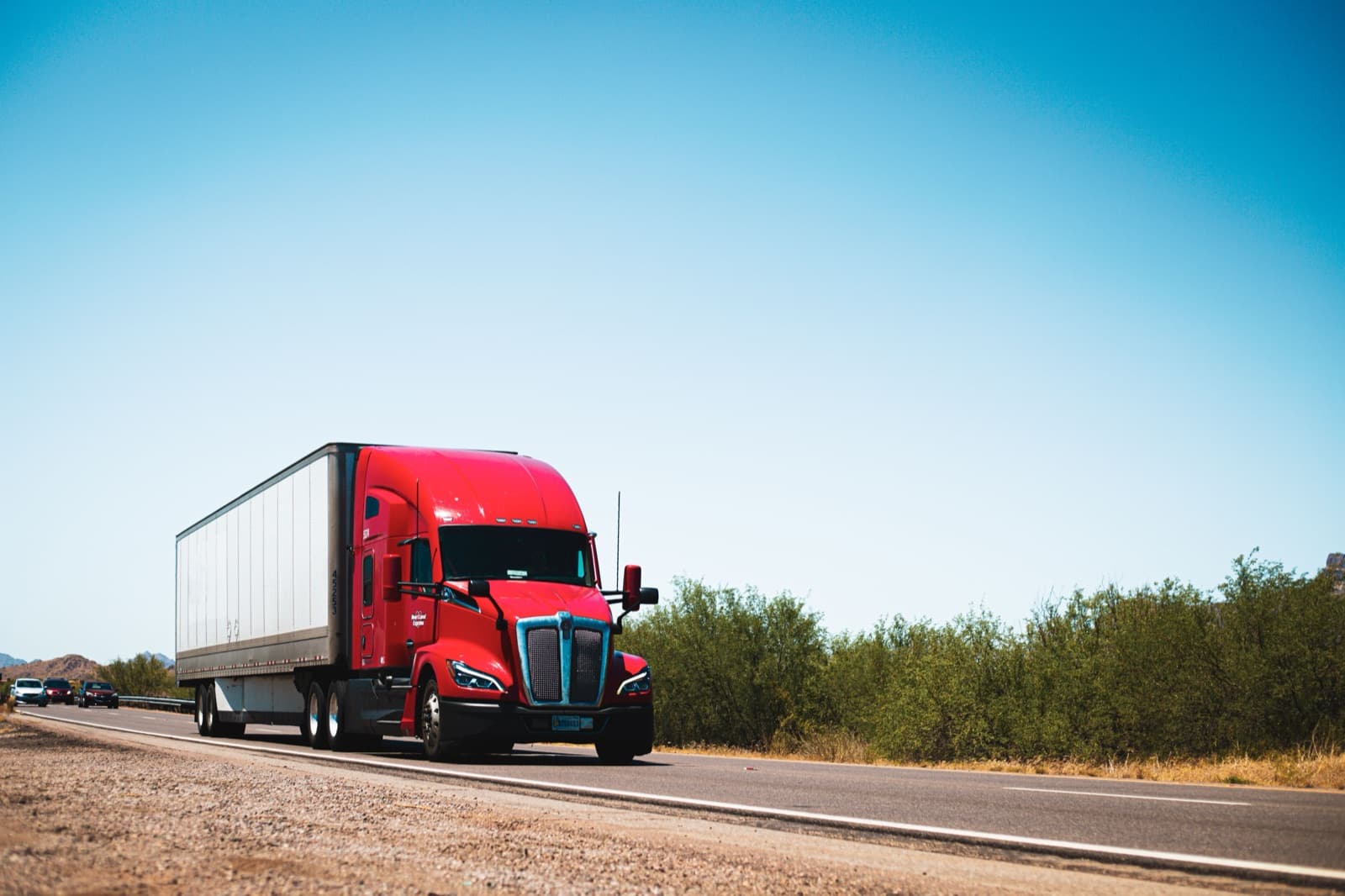
Photo by Tom Jackson on Pexels
Yes, but only if the goods actually qualify. USMCA-originating goods from Canada and Mexico are generally carved out of the Section 122 baseline surcharge, provided they meet the USMCA rules of origin and the importer holds a valid certificate of origin. Shipping from a Canadian or Mexican address is not, by itself, enough. A product that was made in China, routed through Monterrey for repackaging, and trucked across the border still owes the surcharge — because it never became a USMCA-originating good in the first place.
That distinction trips up a lot of importers who assume the exemption is about geography. It isn't. It's about origin, and origin has to be earned and documented, not assumed. Here's how the carve-out actually works, what counts as a qualifying good, and what a USMCA certificate of origin needs to contain to survive a CBP review.
What Section 122 is, in brief
Section 122 of the Trade Act of 1974 gives the President authority to impose a temporary import surcharge, capped at 15%, to address a balance-of-payments problem. In February 2026 the administration invoked it to impose a 10% ad valorem surcharge on imports generally, after the Supreme Court's ruling on the earlier IEEPA-based tariffs. The measure carries a statutory 150-day limit from its effective date, so its exact status shifts on its own schedule — always check the current Federal Register proclamation and any subsequent extension before you rely on a specific rate or expiry date.
Read the full mechanics of the Section 122 surcharge — what it covers, the rate, and how it stacks with other tariffs.
Section 122 tariff explainedHow the USMCA carve-out actually works
The proclamation that imposed the Section 122 surcharge exempted goods that enter duty-free under USMCA — the agreement referenced in General Note 11 to the Harmonized Tariff Schedule. That note is the legal home of USMCA preference: it lists the rules a good has to satisfy to be treated as originating in the US, Canada or Mexico. If a product meets those rules and is properly certified, it's outside the surcharge. If it doesn't, the surcharge applies regardless of which port or land crossing it entered through.
The exemption tracks General Note 11 origin, not the country the goods physically left from. A product transshipped through Canada without meaningful production there is still subject to Section 122 on its real country of origin.
Start freeThis is also why the carve-out is narrower than it sounds. USMCA doesn't wave through everything crossing the northern or southern border — only the subset of goods that were actually produced, or sufficiently transformed, within the three-country bloc under the agreement's specific rules. A Seattle outdoor-gear importer sourcing tents assembled in Tijuana from Chinese-cut fabric panels needs to check the applicable product-specific rule before assuming the Mexican assembly step clears the bar. In many cases, simple cut-and-sew assembly of foreign fabric doesn't meet the USMCA textile rules of origin, even though the finished tents leave from a Mexican factory.
What counts as a USMCA-originating good?
USMCA rules of origin work through a handful of origin criteria, and every qualifying good has to satisfy at least one of them. The agreement's product-specific rules (found in Annex 4-B) tell you which criterion applies to a given HS heading — a T-shirt and a car engine are judged by completely different tests. At a plain-English level, the main categories look like this.
| Criterion | What it means | Example |
|---|---|---|
| Wholly obtained or produced | The good is entirely grown, mined, harvested or manufactured from start to finish within the US, Canada or Mexico, with no foreign inputs at all. | Maple syrup tapped and bottled in Quebec; softwood lumber harvested and milled in British Columbia. |
| Produced entirely from originating materials | Every input used to make the good is already USMCA-originating, even though some of those inputs were themselves manufactured products. | A Mexican furniture maker builds a chair from Mexican-milled wood and US-made hardware that already carries USMCA origin. |
| Tariff shift (change in tariff classification) | Non-originating materials go into the product, but manufacturing changes their HS classification enough to meet the specific rule for that good. | Canadian mills stamp and weld imported steel coil into automotive brackets — a different HS heading than the raw coil. |
| Regional value content (RVC) | A minimum share of the good's value, calculated under the transaction-value or net-cost method, has to come from the US, Canada or Mexico. | An Ontario-assembled electrical panel must show the required RVC percentage sourced regionally, even with some imported Asian components. |
| De minimis (non-originating content allowance) | A small share of non-originating material value doesn't disqualify the good, as long as it stays under the allowed threshold — generally 10% by value. | A Canadian apparel maker uses a small amount of overseas trim that stays within the de minimis allowance for the finished garment. |
Automotive goods run on their own, stricter version of this system — regional value content thresholds, labour-value content requirements, and steel and aluminum purchasing rules that go well beyond the general tests above. If you import vehicles or auto parts, treat that as its own compliance project rather than assuming the general table applies.
See origin explained from first principles — how substantial transformation and rules of origin actually work.
Country of origin, explainedWhat do I actually need on a USMCA certificate of origin?
There's no official government form for this anymore. The old NAFTA-style Certificate of Origin and CBP Form 434 stopped being accepted when USMCA replaced NAFTA in 2020. What CBP requires instead is a set of nine specific data elements, which can appear on almost any document — a standalone certificate, a commercial invoice, or a packing list, as long as everything is there and legible.
- Certifier — whether the importer, exporter, or producer is making the certification.
- Exporter name, address and, where applicable, tax ID.
- Producer name and address, if different from the exporter.
- Importer name and address.
- A description of the good and its HS classification, detailed enough to identify it.
- The origin criterion the good qualifies under (matching the categories above).
- A blanket period, if the certification covers multiple shipments of identical goods over up to twelve months.
- An authorised signature and date.
- A statement certifying the good is originating and the certifier accepts responsibility for the claim.
The paperwork burden dropped, but the accuracy burden didn't. A one-page invoice with all nine elements holds up fine in a CBP review. A missing origin criterion or an unsigned blanket period doesn't — and that's still the single most common reason we see USMCA claims get denied at verification.
One quirk worth knowing: the certificate doesn't have to travel with the shipment. The importer just has to be able to produce it — along with the underlying bill of materials, production records, or supplier declarations that support the origin claim — if CBP asks. Many importers keep a standing blanket certificate on file with a regular supplier and update it annually, rather than generating a new one for every container.
Where importers actually lose the exemption
In practice, the Section 122 USMCA carve-out gets lost in a handful of predictable ways, and none of them are exotic loopholes CBP hasn't seen before.
- Transshipment — goods made elsewhere are routed through Canada or Mexico with minimal processing, hoping the border crossing alone confers origin. It doesn't.
- Insufficient transformation — a genuine manufacturing step happens in Mexico or Canada, but it falls short of the specific tariff-shift or RVC rule for that HS heading.
- Missing or incomplete certification — the shipment would qualify, but the importer can't produce a certificate with all nine data elements when CBP asks.
- Confusing preferential origin with non-preferential origin — a good can be "Made in Mexico" for country-of-origin marking purposes without meeting the tighter USMCA rules of origin needed for tariff preference.
A five-person DTC brand assembling backpacks in Tijuana from Vietnamese-cut panels found this out the hard way: the marking label correctly said "Made in Mexico," but the panels never underwent the tariff shift USMCA requires, so the shipment owed the full Section 122 surcharge on entry despite the Mexican assembly step.
Start freeThe stakes here are real money, not paperwork trivia. On a container of goods valued at $150,000, a 10% surcharge that shouldn't have applied is $15,000 — and if it should have applied and you claimed the exemption anyway, that's a false preference claim CBP can penalise separately from the duty itself.
Check the current landed-cost stack for Canada-origin imports, including Section 122 and USMCA status.
Canada duty & tariff statusCheck the current landed-cost stack for Mexico-origin imports, including Section 122 and USMCA status.
Mexico duty & tariff statusDoes the exemption cover everything from Canada and Mexico?
No — and this is the second trap after transshipment. The Section 122 carve-out is specific to that one measure. It doesn't extend to Section 232 steel and aluminum tariffs, which apply based on the material content of the product rather than USMCA origin. A Canadian-made aluminum extrusion can be genuinely USMCA-originating, fully exempt from Section 122, and still carry a Section 232 duty on the same entry. Treat every applicable tariff programme as its own question with its own origin and product tests, rather than assuming one exemption clears the whole stack.
See the full definition of country of origin and why it drives duty across every tariff programme, not just USMCA.
Country of origin, definedGetting this right before you file
If you import from Canada or Mexico, the practical sequence is straightforward. Classify the good to its HS heading, find the applicable product-specific rule in Annex 4-B, confirm your supply chain actually meets it, and get a properly formatted certificate of origin on file before the goods move — not scrambled together after a CBP request. None of that is a formality you can skip because the goods feel North American; CBP verification requests on USMCA claims are common, and the burden of proof sits with the importer, not the agency.
Section 122's rate, scope and expiry are all live policy details that have moved more than once since the surcharge was first imposed in February 2026. Nothing here should be read as a customs ruling or legal advice — for a specific shipment, verify the current proclamation status against the Federal Register and, for a binding origin determination, consult a licensed customs broker or request a CBP ruling.
The Federal Register proclamation that imposed the Section 122 surcharge and its General Note 11 (USMCA) carve-out.
Federal Register: Section 122 proclamationCBP's official USMCA FAQ page, covering certification, verification and preference claims.
CBP: USMCA FAQsCBP's informational fact sheet on the nine required certification-of-origin data elements.
CBP: origin certification requirementsDoes USMCA exempt goods from the Section 122 surcharge?
Yes, but only for goods that actually qualify as USMCA-originating under the agreement's rules of origin and are backed by a valid certificate of origin. Goods that merely ship from Canada or Mexico without meeting those rules — for example, transshipped or insufficiently transformed goods — do not get the exemption.
Do I need a certificate of origin for every USMCA shipment?
The certifier needs to have one on file and be able to produce it if CBP asks, but it doesn't have to physically travel with the shipment. A blanket certificate can cover multiple shipments of identical goods for up to twelve months.
Is there an official USMCA certificate of origin form?
No — unlike the old NAFTA certificate, USMCA has no prescribed form. Any document is acceptable as long as it contains all nine required data elements, including the origin criterion, HS classification, and an authorised signature.
Does the USMCA exemption also cover Section 232 steel and aluminum tariffs?
No. The Section 122 carve-out is specific to that surcharge and doesn't extend to Section 232, which applies based on a product's steel or aluminum content regardless of USMCA origin. A genuinely USMCA-originating product can still owe a Section 232 duty.
What happens if I claim the USMCA exemption but my goods don't actually qualify?
You owe the Section 122 surcharge plus interest once CBP catches the error, and a false preference claim can trigger separate penalties on top of the duty itself. Keeping bills of materials and supplier declarations on file is what protects you if CBP opens a verification.
Classify your product and check whether it qualifies for a USMCA exemption from Section 122 and other stacked tariffs.
Check your landed cost