Did the Supreme Court strike down IEEPA tariffs?
Yes — on 20 Feb 2026 the Court ruled IEEPA doesn't authorise tariffs. What that means for duties already paid, and the Section 122 tariff that replaced them.
July 7, 2026 · 10 min read
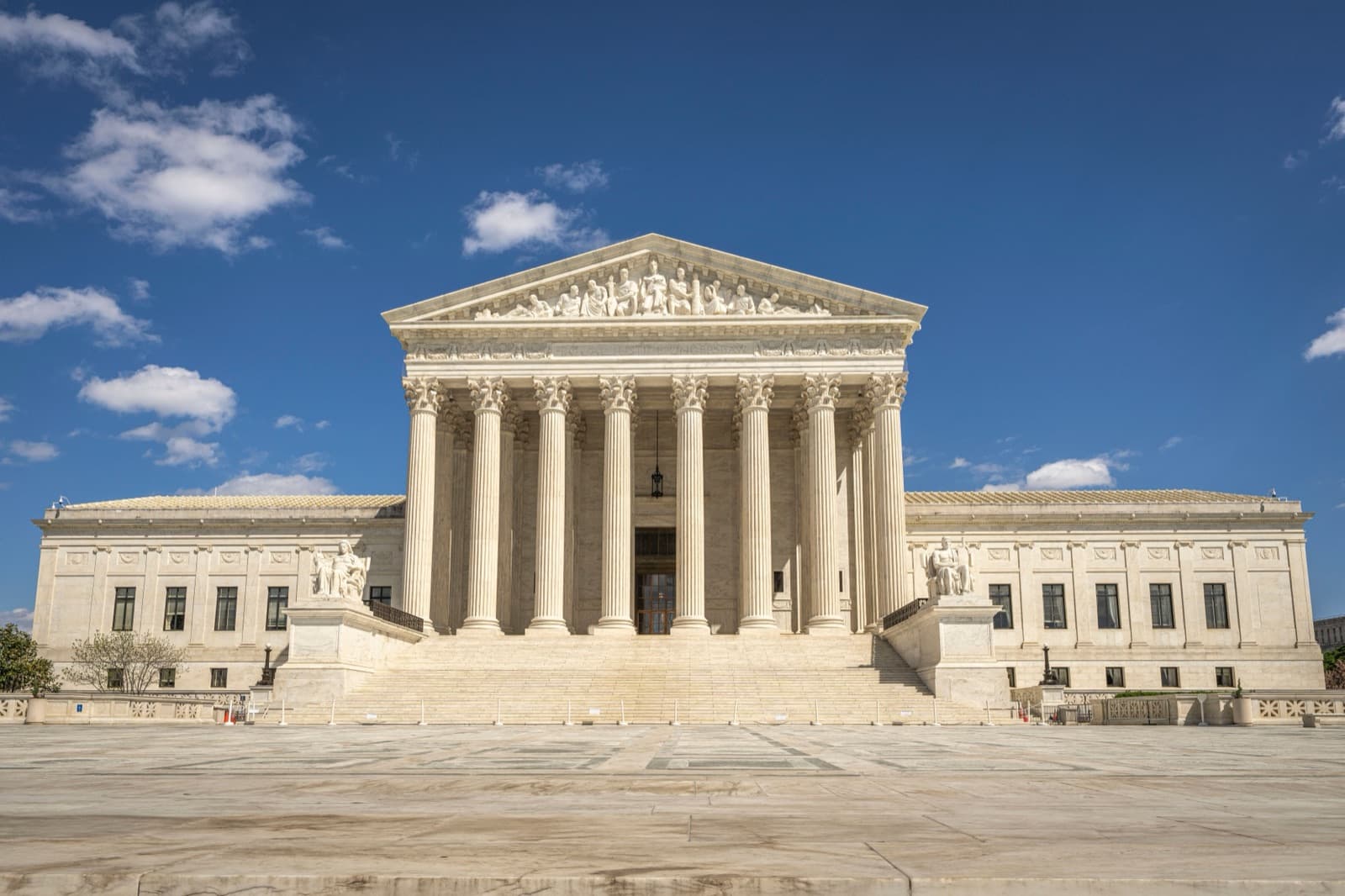
Photo by Mark Stebnicki on Pexels
Yes. On 20 February 2026, the Supreme Court ruled that the International Emergency Economic Powers Act does not give the President the power to impose tariffs. The case is Learning Resources, Inc. v. Trump, 607 U.S. ___ (2026), decided 6-3. If you paid a customs invoice with an IEEPA-tied duty line any time between February 2025 and the ruling, that specific charge no longer rests on valid legal authority — but the story doesn't end there, because the administration replaced the IEEPA tariffs with a different measure, Section 122, the same day. Here's exactly what was decided, what it means for duties you've already paid, and where things stand now.
What is IEEPA, and how did it end up setting tariffs?
The International Emergency Economic Powers Act was passed in 1977. It gives the President power to regulate a range of economic transactions during a declared national emergency — historically, that has meant asset freezes and trade embargoes aimed at hostile states or sanctioned individuals, not general import duties. In February 2025 the administration invoked IEEPA to justify tariffs on imports from Canada, Mexico and China, citing drug trafficking and border security as the emergency. A broader set of country-by-country "reciprocal" tariffs followed in April 2025, also grounded in IEEPA rather than in one of the trade statutes Congress wrote specifically for tariffs, such as Section 301 or Section 232.
The legal fight came down to one sentence: IEEPA's text talks about the power to regulate imports, but Congress has separate, more specific statutes — Section 301, Section 232, Section 122 — that explicitly grant tariff-setting power, complete with their own procedures and limits. The challengers argued IEEPA was never meant to be a general tariff tool. The Court agreed.
Start freeWhat did the Supreme Court actually decide?
Learning Resources, a toy and educational-supplies importer, and a group of other small businesses represented separately in the consolidated case Trump v. V.O.S. Selections, sued on the theory that IEEPA does not authorise tariffs at all. The Court of International Trade agreed with the challengers in mid-2025 and blocked enforcement; the Federal Circuit heard the case en banc and largely affirmed. The Supreme Court then took the case and, on 20 February 2026, ruled 6-3 that IEEPA does not authorise the President to impose tariffs. The majority opinion, written by Chief Justice Roberts, applied the major questions doctrine: when the executive branch claims a power of "vast economic and political significance," Congress has to have said so clearly, and the phrase "regulate… importation" in IEEPA doesn't clear that bar. The ruling vacated the tariffs that had been imposed under IEEPA authority, including the February 2025 border-related tariffs and the April 2025 reciprocal tariff programme.
Read the Court's opinion directly rather than a secondhand summary.
Supreme Court opinion, No. 24-1287The replacement arrived the same day: Section 122
This is the part that catches a lot of importers out. The ruling didn't leave a gap for long. On 20 February 2026 — the day of the decision — the administration signed Proclamation 11012, invoking Section 122 of the Trade Act of 1974 to impose a 10% baseline surcharge on imports from virtually every country, effective 24 February 2026. Section 122 lets the President respond to a serious balance-of-payments problem with a temporary surcharge, capped by statute at 15% and 150 days per invocation — a provision last used during the 1971 'Nixon shock'. The administration signalled within a day that it intended to raise the rate to the statutory 15% maximum. Because Section 122 is a tariff-specific power Congress actually wrote for this purpose, rather than a sanctions statute repurposed for it, it sits on different legal footing than IEEPA did — though, as the next section covers, that footing has been tested too.
See the full mechanics of the Section 122 surcharge that replaced the IEEPA tariffs — rate, scope and how it stacks with Section 301/232.
Section 122 tariff explainedIs Section 122 itself now being challenged?
Yes — and this is worth knowing before you assume the tariff story is settled either way. On 7 May 2026, the Court of International Trade ruled 2-1 that the Section 122 surcharge (Proclamation 11012) also exceeds the President's statutory authority, and issued an injunction — but one limited to the specific plaintiffs in that case, not a blanket order covering every importer. The government appealed, and the Federal Circuit issued an administrative stay on 12 May 2026, then formally stayed the CIT's ruling pending appeal on 11 June 2026. The practical effect: the Section 122 surcharge, reportedly raised to 15%, has continued to be collected on most imports while the appeal proceeds. Separately, the measure carries its own statutory clock — the 150-day authorisation from the original proclamation runs out around 24 July 2026 unless extended by a fresh proclamation.
| Date | What happened |
|---|---|
| 2025-02 | Administration invokes IEEPA for tariffs on Canada, Mexico and China, citing border/drug-trafficking emergencies. |
| 2025-04 | Broader country-by-country 'reciprocal' tariffs added, also grounded in IEEPA. |
| 2026-02-20 | Supreme Court rules 6-3 in Learning Resources v. Trump that IEEPA does not authorise tariffs; the IEEPA-based tariffs are vacated. |
| 2026-02-20 | Same-day Proclamation 11012 invokes Section 122, imposing a 10% baseline surcharge on imports from nearly all countries, effective 2026-02-24. |
| 2026-05-07 | Court of International Trade rules 2-1 that the Section 122 surcharge also exceeds presidential authority (relief limited to the plaintiffs in that suit). |
| 2026-06-11 | Federal Circuit stays the CIT ruling pending appeal — Section 122 duties continue to be collected on most imports. |
| 2026-07-24 (approx.) | The 150-day statutory window on the original Section 122 proclamation is due to expire unless renewed. |
What's actually at stake for duties you already paid?
The Supreme Court's ruling means IEEPA-based tariffs collected between February 2025 and February 2026 rested on authority the Court says never existed. That's a different, stronger position for importers than a tariff merely being paused — but a favourable ruling on the legal question doesn't put money back in an account automatically. Refunds at this scale move through Customs and Border Protection's entry and liquidation system, and the mechanics for a vacatur of this size — reporting has estimated the IEEPA tariffs collected in the low hundreds of billions of dollars — are still being worked out administratively. Whether your specific entries qualify depends on things like liquidation status and whether you filed a protest, which is exactly the kind of detail that changes case by case.
Clients ask us to just tell them the refund number. Nobody can, honestly — CBP hasn't published a single consolidated process for a vacatur this size, and the Section 122 litigation happening in parallel is muddying the picture further. What we can do is make sure their entry records are clean enough that whichever process CBP settles on, they're ready to use it on day one.
CBP publishes guidance and Cargo Systems Messaging Service bulletins on duty refund mechanics as they're finalised.
CBP trade guidanceWhich tariffs were not part of this case?
It's easy to assume one Supreme Court ruling settles "the tariffs" as one undifferentiated pile — it doesn't. Section 301 duties on Chinese-origin goods and Section 232 duties on steel, aluminum and their derivatives rest on separate statutes entirely independent of IEEPA, and neither was touched by this ruling. Section 122 was a direct successor measure to the vacated IEEPA tariffs, not part of the case itself, which is why it's now being tested separately in its own litigation rather than resolved by the February decision.
- Section 301 China tariffs — Trade Act of 1974, unaffected by the IEEPA ruling.
- Section 232 steel/aluminum and derivative tariffs — Trade Expansion Act of 1962, unaffected.
- Section 122 baseline surcharge — a separate Trade Act of 1974 authority; replaced the IEEPA tariffs same-day, and is itself now under appeal at the Federal Circuit.
- Only tariff actions that specifically cited IEEPA as their legal basis were vacated by this ruling.
The Section 301 China duty stack rests on entirely separate legal ground and is unaffected by either ruling — see how those layers work.
Section 301 China tariffsWhat should importers do right now?
A Denver outdoor-gear importer put roughly $40,000 of IEEPA-tied duty into a single spring 2025 shipment of tents and packs from a Vietnamese supplier. Her instinct after the ruling was to wait for a refund cheque to show up. The more useful move is to get organised now, because the paperwork you need is the same regardless of how the Section 122 appeal resolves or when CBP finalises a refund process.
- Pull together every entry summary and CBP Form 7501 where an IEEPA-based duty was assessed between February 2025 and February 2026, organised by entry number and liquidation date.
- Note which entries are already liquidated and which are still open — that distinction matters for refund eligibility.
- Keep paying current Section 122 duties as invoiced; it remains in force under the Federal Circuit's stay, and withholding payment is not a safe strategy.
- Set a watch on CBP's Cargo Systems Messaging Service and the Federal Register for refund guidance and for whatever happens to Section 122 around its 24 July 2026 expiry.
- Separate your (now-vacated) IEEPA-tied duty history from your current Section 301/232/122 duty in your own books, so a refund claim doesn't get tangled up with duties you still legitimately owe.
Don't assume a resolved legal question means an automatic cheque, and don't assume Section 122 has been struck down just because a trial court ruled against it once — the Federal Circuit's stay means it is, in practice, still in force today. Importers who keep clean, well-organised records tend to move fastest whichever way each appeal lands.
Start freeWhere to check the current status
The Supreme Court's ruling on IEEPA is final and settled — that part of this story is over. The Section 122 litigation is not; it is actively moving through the Federal Circuit, and the surcharge's own 150-day statutory clock adds a second, independent reason its status could change again shortly after this was published. The Supreme Court's docket and the Federal Circuit's docket are the authoritative record for each respective case. CBP's trade pages are the authoritative source for how any refund process actually works. Nothing in this article is legal, customs or tax advice; if a specific outcome materially affects your business, talk to a customs broker or trade attorney who can review your actual entries.
Run your current landed cost with today's confirmed duty layers, sourced and dated, rather than guessing at what might change next.
Calculate my landed costWe track the reciprocal and Section 122 tariff programme separately from Section 301/232, with sources and update dates.
Reciprocal & Section 122 tariffs, trackedIEEPA tariffs Supreme Court case FAQ
Did the Supreme Court strike down the IEEPA tariffs?
Yes. On 20 February 2026 the Court ruled 6-3 in Learning Resources, Inc. v. Trump that the International Emergency Economic Powers Act does not authorise the President to impose tariffs, vacating the IEEPA-based tariffs on Canada, Mexico, China and the broader 'reciprocal' tariff programme.
What replaced the IEEPA tariffs?
The same day as the ruling, the administration invoked Section 122 of the Trade Act of 1974 to impose a 10% baseline surcharge on imports from nearly all countries, later reportedly raised toward the statutory 15% maximum. Section 122 is capped by law at 150 days per invocation.
Is the Section 122 tariff that replaced IEEPA also being challenged?
Yes. The Court of International Trade ruled against it in May 2026, but the Federal Circuit stayed that ruling pending the government's appeal, so the surcharge has continued to be collected on most imports. Its 150-day statutory window is separately due to expire around 24 July 2026 unless renewed.
Will importers automatically get a refund for IEEPA duties already paid?
Not automatically. Even though the Supreme Court's ruling settled the legal question, CBP still has to administer refunds through its entry and liquidation system, and eligibility depends on details like whether a given entry is already liquidated or under protest.
Do Section 301 and Section 232 tariffs still apply?
Yes, unchanged. Section 301 China duties and Section 232 steel/aluminum duties rest on separate statutes and were not affected by either the IEEPA ruling or the Section 122 litigation.
New to how Section 301 works in the first place? Start with the plain-English breakdown of the China tariff mechanism.
Section 301, explained