China Tariff 2026: How Section 301 Import Duty Stacks
Import duty from China to the USA is layered, not one number: base HTS rate, Section 301 and more stack together. Here's where to check your real rate.
June 24, 2026 · 9 min read
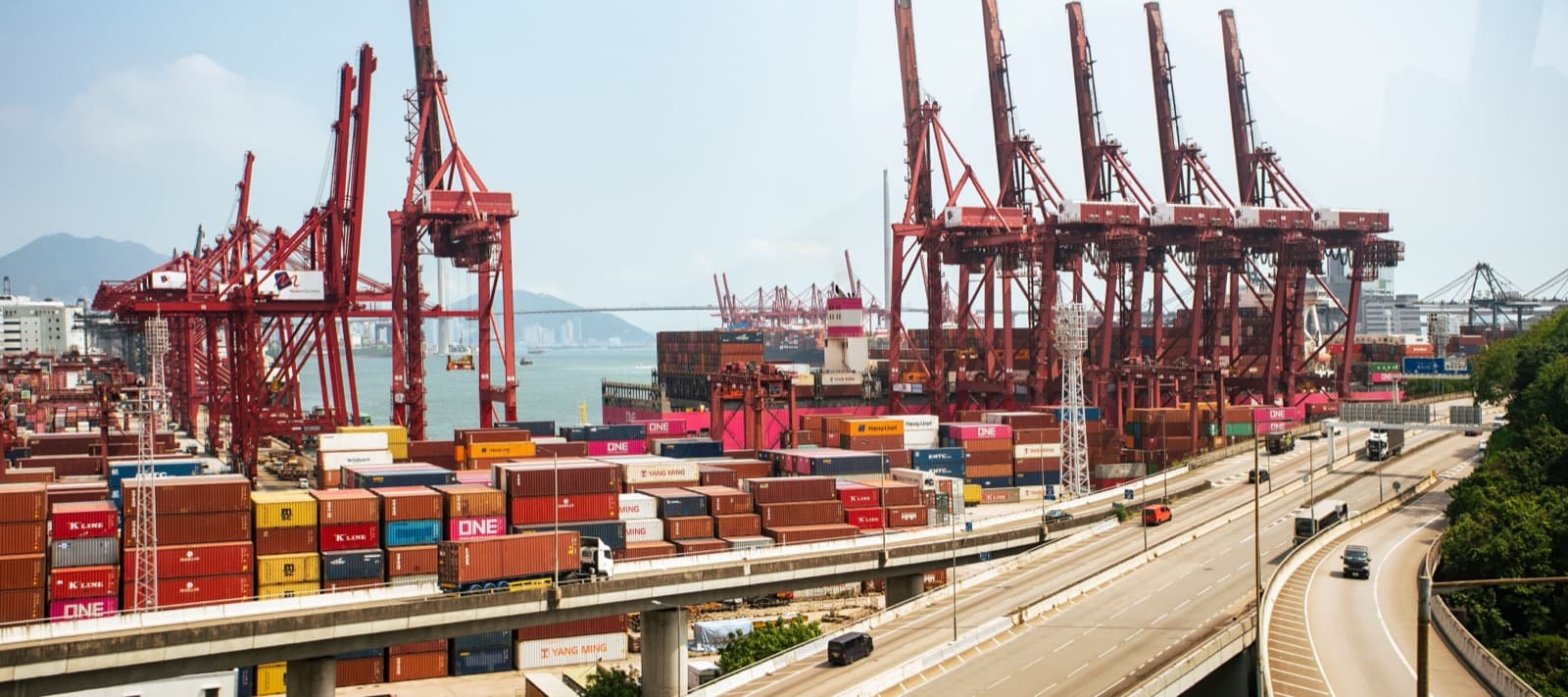
Photo by Jimmy Chan on Pexels
Type "china tariff" into a search bar and you'll get a dozen different numbers from a dozen different sources, most of them stale the day they were published. That isn't because anyone is lying to you. It's because the import duty from China to the USA on any given product was never one number to begin with — it's a stack of separate charges, layered on top of each other, each governed by its own law and each capable of changing on its own schedule. Learning the stack, rather than memorising a headline percentage, is what actually lets you price a product, quote a customer or plan a shipment with any confidence. Here is how that stack is built in 2026, piece by piece, and where to check the live number for your exact product.
What does "the tariff on China" actually mean in 2026?
Most people asking about current tariffs on China picture one flat surcharge, a bit like a sales tax. In practice it works more like an assembly line: each stage adds its own charge to the customs value of the shipment, and only the final total is what you owe at entry. Some stages apply to every import regardless of where it comes from. Others exist specifically because the goods originate in China. A T-shirt and a laptop can leave the same factory floor in Shenzhen and end up with wildly different duty bills, because each has a different HTS classification and each sits on a different rung of the stack.
Layer 1 — the base HTS rate everyone pays
Every product entering the United States carries a general, Column 1 rate tied to its Harmonized Tariff Schedule classification — a 10-digit code that describes the product in remarkable detail. This is the most-favoured-nation rate, and it applies to imports from almost any normal trading partner, not just China. Some lines carry no base duty at all: laptops and most computer hardware generally enter free. Others carry a meaningful one — cotton knit T-shirts sit at roughly 16.5%, a rate that has held fairly steady for years because it comes from treaty commitments rather than executive action. The base rate is the floor. Everything China-specific gets added on top of it, not instead of it.
Check the country-level duty reference for China-origin shipments, including which measures currently apply.
Open the China duty referenceLayer 2 — Section 301, the China-specific layer
Section 301 of the Trade Act of 1974 is the legal mechanism behind the additional tariffs that make Chinese-origin goods more expensive than the same product shipped from, say, Vietnam or Mexico. The US Trade Representative opened an investigation into Chinese trade practices in 2017 and, from 2018 onward, published the affected goods in four tranches, generally known as List 1, List 2, List 3 and List 4A. Which list a product sits on is decided by its HTS number, not by its brand or its price — two near-identical products can land on different lists if their classification differs by only a few digits. This is the layer most people mean by "301 tariffs", and it's the one that has moved the most since 2018, through statutory reviews, exclusions, reinstatements and modifications.
How do the Section 301 list tranches differ?
The table below shows roughly how the four original tranches came together. Treat the rate column as historical and illustrative, not as today's number — list assignments and rates have been revised repeatedly since 2018, and the only legally binding figure for your exact HTS line is the one published by USTR and reflected in Chapter 99 of the tariff schedule.
| List | Year introduced | Broad product coverage | Illustrative additional rate |
|---|---|---|---|
| List 1 | 2018 | Industrial machinery, motors, electronic components | 25% |
| List 2 | 2018 | Chemicals, plastics, semiconductors, machinery parts | 25% |
| List 3 | 2018 | Consumer goods, food ingredients, furniture inputs, textiles | 25% |
| List 4A | 2019 | Consumer electronics, apparel, footwear, housewares | 7.5% |
The rates above are what the lists carried through most of their history, not necessarily what they carry today. Section 301 rates have been through statutory reviews, court challenges and country-specific negotiations — always confirm the live rate against USTR and Chapter 99 before you quote a customer or file an entry.
Start freeAre there exclusions from Section 301 duty?
Sometimes, yes — and this is the detail that catches out importers who assume a product is permanently stuck with its list rate. USTR has periodically opened exclusion windows that temporarily remove the 301 duty from specific HTS subheadings or product descriptions, usually after industry petitions. An exclusion is narrow by design: it's tied to an exact classification and description, it has a defined start and end date, and it can lapse or get extended with little warning. A product that qualified for exclusion last year is not automatically excluded this year, so the current list is the only one that matters.
We keep a running breakdown of how to check whether your HTS line currently has an active exclusion.
Read: how to check Section 301 exclusionsLayer 3 — Section 232, Section 122 and the newer measures
Section 301 isn't the only trade-related layer that can apply to a China-origin shipment. If your product is steel, aluminum or a derivative of either — aluminum extrusions, steel fasteners, furniture with substantial metal components — Section 232 national-security tariffs can apply on top of, and independently of, Section 301. Separately, more recent actions under authorities such as Section 122 have introduced broader, faster-moving surcharges that aren't tied to a single country in the way Section 301 is. These newer layers tend to be announced, adjusted and occasionally paused within weeks rather than years, which is a very different pace to the multi-year review cycle Section 301 has generally followed.
Section 122 works differently to Section 301 — here's how it's triggered and how it stacks with everything else.
Read: Section 122 tariffs explainedHow the layers stack — a worked example
The additional layers are almost always ad valorem, meaning a percentage of the customs value, and they add together rather than compounding on top of one another. Take a six-person homeware brand based in Austin, Texas, importing 2,000 ceramic mugs from a factory in Guangdong. The supplier invoice — the customs value — comes to $4,500. Ceramic tableware carries a base HTS rate of around 9.8%, and this line currently sits on a Section 301 list carrying an additional 7.5%. Ocean freight and insurance together add $650.
- Base duty: 9.8% of $4,500 = $441.
- Section 301 duty: 7.5% of $4,500 = $337.50.
- MPF: 0.3464% of $4,500 = about $15.59, subject to the current per-entry minimum.
- HMF (ocean cargo only): 0.125% of $4,500 = $5.63.
- Landed cost = $4,500 + $650 + $441 + $337.50 + MPF + $5.63 — call it roughly $5,950 all-in.
That's close to a 32% uplift over the invoice price before the mugs have even left the port, and duty accounts for most of it. Importers who price off the supplier invoice alone routinely discover the gap only after the entry has already been filed.
Start free| Layer | What it is | Roughly adds |
|---|---|---|
| Base HTS rate | Column 1 (MFN) duty for the exact 10-digit line | 0% to around 20%, product-dependent |
| Section 301 | China-specific additional tariff, by list | Historically 7.5%–25% — verify current list status |
| Section 232 (if applicable) | Steel, aluminum and derivative products | Historically up to 25%, higher on some derivatives |
| Newer Chapter 99 measures | Reciprocal, emergency or Section 122-type actions | Varies — check the current Federal Register notice |
| MPF | Merchandise Processing Fee, all formal entries | 0.3464%, with an annually adjusted floor and cap |
| HMF | Harbor Maintenance Fee, ocean cargo only | 0.125% of customs value |
Run your own product's value, HS code and origin through the calculator to see every layer itemised, with sources.
Calculate my China duty stackHow do I find my product's real China duty rate?
Start with the HTS classification, not the tariff. Every rate in the stack — base, 301, 232, everything — is keyed to your product's exact 10-digit HTS line, so a rough or generic classification gets you a rough and possibly wrong answer. Confirm the base rate against the USITC's published schedule, then check whether your line appears on an active Section 301 list and whether an exclusion currently applies to it. If your product has steel or aluminum content, check Section 232 coverage separately, since it's assessed on its own criteria rather than folded into the 301 list. Doing this properly, by hand, for a catalogue of any size is genuinely tedious — which is why most importers who ship regularly from China use a lookup tool instead of rebuilding the research on every SKU.
We track the current China measures and their scope on one page, with sources and verification dates for each.
See the China tariff trackerCustoms brokers who handle China-origin freight every day tend to describe the job less as memorising a tariff rate and more as maintaining a live watch list — the classification, the list assignment and the exclusion status can each move independently, and missing any one of them shows up later as a bill nobody budgeted for.
Does shipping through a third country change the tariff?
No. Country of origin is decided by where a product is substantially transformed, not by which port or warehouse it passes through on the way to the US. Routing Chinese-origin goods through a third country such as Vietnam or Malaysia doesn't change their origin unless genuine, substantial manufacturing happens there — repackaging, relabelling or light assembly generally doesn't qualify. CBP actively investigates transshipment schemes designed to disguise origin, and importers who file with a false country of origin can face penalties well beyond the duty they were trying to avoid, including seizure and referral for enforcement action.
Country of origin is the single fact that decides which tariff layers apply to your product — here's how it's actually determined.
Read: how country of origin decides your tariffSection 301 and related duties attach to origin, not to who you bought the goods from or which country issued the invoice. Misrepresenting origin to avoid the tariff is a customs offence, not a workaround.
Start freeNone of this is legal, customs or tax advice — it's a map of how the mechanism works, not a substitute for a licensed customs broker or a binding CBP ruling on your specific product. Rates, list assignments and exclusion windows genuinely do move, sometimes within the same quarter, so treat any percentage in this article as a way to understand the shape of the calculation rather than a number to file with.
Frequently asked questions about China tariffs
What is the current tariff rate on imports from China?
There is no single current tariff rate on imports from China — the total depends on your product's base HTS rate plus any Section 301, Section 232 or other measures that apply to its specific classification. Because these additional layers change through exclusions, reviews and new executive actions, the only reliable way to get today's number is to check your exact HTS line against USTR's published tariff actions and the current Chapter 99 modifications.
How do I find the HTS code and duty rate for a product from China?
Classify the product to its full 10-digit HTS line using its description, material and function against the USITC's Harmonized Tariff Schedule, then read off the Column 1 base rate for that line. From there, check whether the line is covered by an active Section 301 list, a Section 232 measure, or any newer Chapter 99 action, since each is assessed separately and adds to the base rate.
Are there exemptions or exclusions from Section 301 tariffs?
Yes, USTR periodically grants exclusions for specific HTS subheadings, usually following industry petitions, and these exclusions carry a defined start and end date rather than lasting indefinitely. A product excluded last year is not automatically excluded this year, so you need to check the current exclusion list against your exact classification before assuming the duty doesn't apply.
Does Section 301 apply to low-value or personal shipments?
Section 301 duty is generally assessed on the entry regardless of value, though shipments that historically qualified for de minimis treatment were handled differently — and de minimis eligibility for China-origin goods has itself changed materially in recent policy actions, so check the current rule rather than assume an older exemption still applies.
Can routing goods through another country avoid Section 301 duty?
No — country of origin is determined by where a product is substantially transformed, not by which country it ships from, so simply routing Chinese-origin goods through a third country doesn't remove the Section 301 duty. CBP treats this kind of transshipment as a compliance risk and investigates it actively, with penalties that can exceed the duty an importer was trying to avoid in the first place.
Enter your product's value, HS code and origin and see the full China duty stack computed in one place, with sources.
Try the import duty calculatorSection 301 covered-product lists and modifications are published by the US Trade Representative — the primary source for what applies to your line.
USTR Section 301 tariff actionsConfirm your base HTS rate on the schedule of record before you file.
Open the USITC HTSNew Section 301 modifications and exclusion notices are published in the Federal Register as they take effect.
Search the Federal Register