MPF and HMF: the customs fees importers forget
Beyond duty, CBP charges two fees on imports: the Merchandise Processing Fee and Harbor Maintenance Fee. Rates, minimums, and how customs value is set.
April 16, 2026 · 10 min read
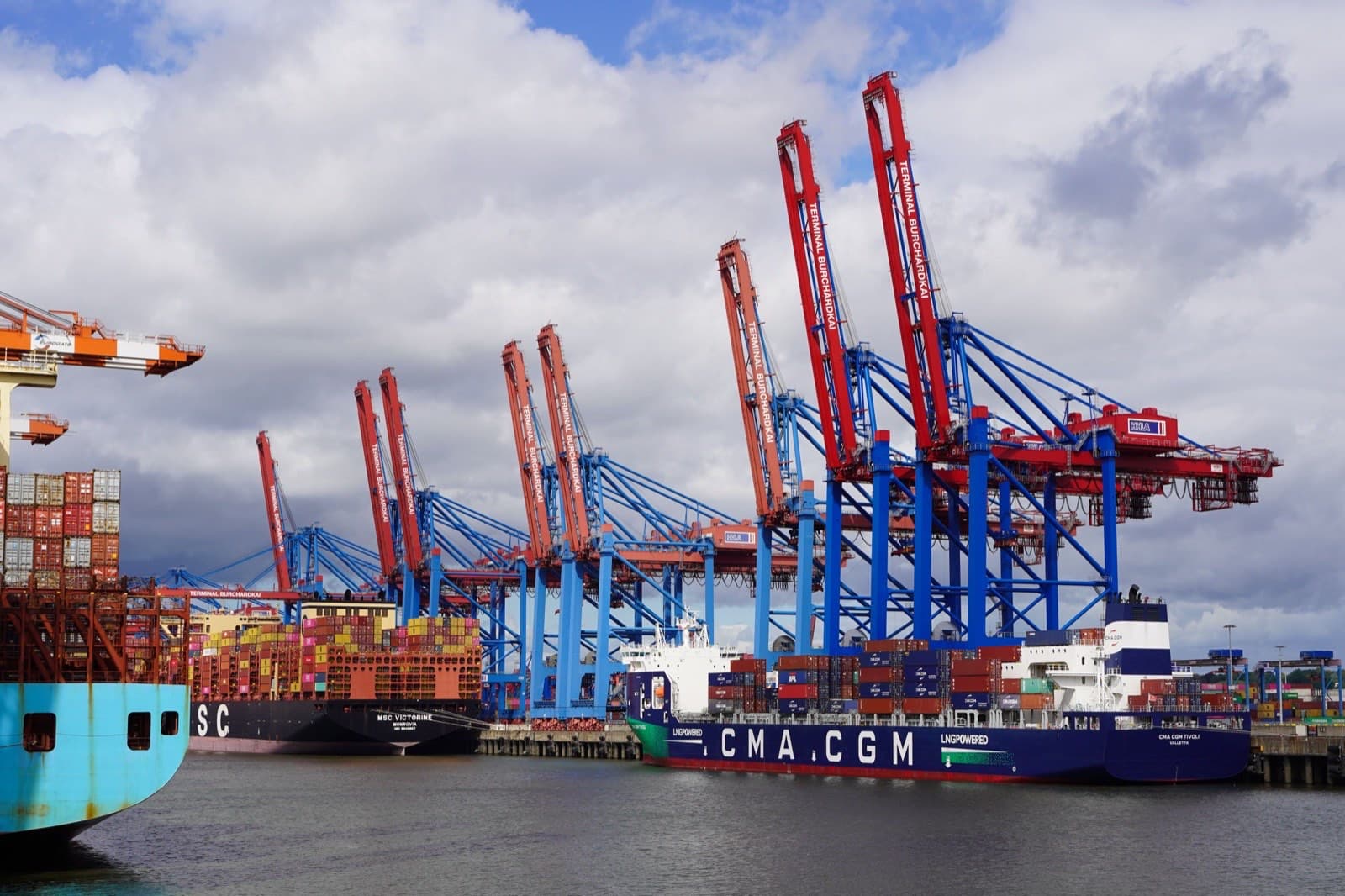
Photo by Wolfgang Weiser on Pexels
Most first-time importers price a shipment by adding freight to the supplier invoice and calling it done. Some remember duty. Almost nobody remembers the two federal fees CBP charges on top of that: the Merchandise Processing Fee and the Harbor Maintenance Fee. Neither is large alone. Together, they're a mandatory line item CBP will collect whether or not you budgeted for it — and they trip up new importers more than the duty rate does, simply because nobody warns you they exist.
This guide covers what each fee is, how it's calculated, where the money comes from — customs value, not the invoice price you might assume — and how the two behave differently depending on how your goods arrive in the country.
What is the Merchandise Processing Fee (MPF)?
The Merchandise Processing Fee is what CBP charges to process your entry paperwork. It's an ad valorem fee, which just means it's calculated as a percentage of value rather than a flat charge per shipment. For formal entries — broadly, commercial shipments above the informal-entry threshold — the rate is 0.3464% of the customs value of the goods.
That percentage sounds simple, but MPF has a wrinkle most duty rates don't: it's bounded. CBP sets a minimum and a maximum fee per entry, adjusted every fiscal year for inflation. On a small entry, you pay the flat minimum even if 0.3464% of the goods would work out to less. On a very large entry, the fee is capped, so a $2 million shipment doesn't keep scaling forever — it hits the ceiling and stops.
- Rate: 0.3464% of customs value, for formal entries.
- Minimum and maximum: set per entry, adjusted every fiscal year — always check the current figures before you rely on a number.
- Informal entries (generally shipments valued at $2,500 or less) pay a smaller flat MPF instead of the percentage rate.
- Charged per entry, not per line item — how you consolidate shipments into entries can change the total you pay.
Because the minimum and maximum move every fiscal year, don't hard-code last year's figures into a spreadsheet. Verify the current amounts against CBP's fee notice before you file, or use a landed-cost tool that pulls the live numbers for you.
Start freeCBP publishes the MPF rate and the annually-adjusted minimum and maximum in its COBRA user-fee table.
CBP user-fee tableSee the plain-English definition of MPF, with worked examples at different entry values.
What is MPF?What is the Harbor Maintenance Fee (HMF)?
The Harbor Maintenance Fee funds dredging and upkeep of US ports and harbors — the channels have to stay deep enough for container ships, and someone has to pay for that. HMF is 0.125% of customs value, and the condition that catches people out is the mode of transport: it only applies to commercial cargo that arrives by vessel. Air freight doesn't pay it. Trucked-in cargo crossing a land border doesn't pay it either. Only ocean cargo does.
Unlike MPF, HMF has no floor and no ceiling — it's a flat 0.125% on every ocean entry, whether the shipment is worth $3,000 or $3 million. There's also a historical quirk worth knowing: HMF used to apply to exports too, until the Supreme Court ruled in 1998 that taxing exports this way violated the Constitution's Export Clause. Since then it's only ever been charged on imports and certain domestic waterborne movements.
- Rate: 0.125% of customs value, flat — no minimum, no maximum.
- Applies to: commercial cargo arriving by vessel at a US port.
- Does not apply to: air freight or land-border entries.
- Scales linearly with value, so it's easy to estimate without a lookup table.
Full breakdown of HMF, including how it's collected and who's liable to pay it.
What is HMF?| Fee | Rate | Applies to | Min/max? |
|---|---|---|---|
| Merchandise Processing Fee (MPF) | 0.3464% of customs value (formal entries) | All modes — ocean, air, land border | Yes — annual minimum and maximum per entry; informal entries pay a smaller flat fee |
| Harbor Maintenance Fee (HMF) | 0.125% of customs value | Ocean cargo only, arriving at a US port | No — flat percentage, no floor or cap |
How is customs value calculated in the first place?
Both fees are ad valorem — a percentage of customs value, sometimes called the entered value — so it matters enormously how that value is worked out. Get it wrong and every fee, plus duty itself, is wrong along with it.
The primary method, used for most commercial imports, is transaction value: the price actually paid or payable for the goods when sold for export to the US, plus a short list of required additions. Those typically include assists (tooling or materials you supplied to the factory free or at reduced cost), certain packing costs, and royalties tied to the sale. Whether freight and insurance are already inside that price depends on your Incoterms — a CIF price includes them, an FOB price doesn't — which is why two shipments with an identical invoice total can still land at different customs values.
Transaction value isn't always usable. Where there's no genuine sale — related-party deals where price might be influenced by the relationship, consignments, or goods brought in for testing — CBP falls back to alternative methods, applied in order. Deductive value works backwards from the US resale price, minus post-importation costs. Computed value builds the figure up from materials, fabrication and profit reported by the producer. Both exist for the cases where transaction value can't honestly be used, and both need more paperwork than a simple invoice.
If your supplier is a related party — a subsidiary, a joint-venture factory, anyone you don't deal with fully at arm's length — CBP will scrutinise whether the invoiced price reflects fair market value. That's the single most common reason transaction value gets challenged on audit.
Start freeRead the full explanation of customs value, transaction value and what counts as an assist.
What is customs value?The transaction value method — "the price actually paid or payable" — is defined internationally under the WTO/WCO valuation framework.
WCO customs valuationA worked example
Take an Ohio outdoor-furniture importer bringing in a container of teak patio sets from Vietnam, arriving by ocean at the Port of Long Beach. The commercial invoice — and the customs value, since the deal is FOB with no assists or royalties — comes to $42,000. On a shipment that size:
- MPF: 0.3464% of $42,000 = about $145.49, comfortably inside the annual cap.
- HMF: 0.125% of $42,000 = $52.50, because the goods arrived by vessel.
- Combined fees: roughly $198, before duty and any Section 301 or 232 measures are added.
Now compare a smaller electronics shipment flown in from Taiwan, customs value $15,000. MPF works out to about $51.96 — but if that's below CBP's current per-entry minimum, the flat floor applies instead, so the actual charge could be higher than the percentage suggests. Because it came by air, HMF simply doesn't apply. Same importer, same origin country, two different fee profiles, purely down to mode of transport.
Customs brokers describe MPF and HMF as the fees clients forget twice — once when they're budgeting a shipment, and again when they're reconciling the entry summary and can't work out where the extra few hundred dollars came from. Neither fee is complicated once you know the rate and the conditions; the problem is that almost nobody tells new importers to look for them.
Do MPF and HMF apply to every shipment?
MPF applies to nearly every commercial entry, formal or informal, though informal entries below the $2,500 threshold pay a smaller flat fee instead of the percentage rate. HMF is narrower: it only applies to ocean cargo, so anything arriving by air or over a land border with Canada or Mexico skips it entirely. Split volume across modes — some ocean, some air — and your fee profile will differ shipment to shipment even for identical goods from the same supplier.
Both fees are calculated on customs value only. Freight and insurance charges that sit outside the customs value — an FOB shipment's ocean freight, for instance — aren't part of the base either fee is calculated against, even though that same freight cost absolutely belongs in your landed-cost total.
How MPF and HMF fit into your landed cost
Neither fee alone will sink a deal. What sinks deals is forgetting several small mandatory costs at once — MPF, HMF, brokerage, a bond premium — and finding the gap only once the entry summary lands and margin has already been quoted. Individually, they're rounding errors. Stacked across a year of shipments, they're a real, budgetable cost that belongs in your unit economics from the first quote.
Enter product cost, freight, HS code and origin and get MPF, HMF, duty and any additional tariffs itemised automatically.
Calculate landed costMost regular importers also carry a continuous customs bond, covering the government's exposure across all entries for the year instead of posting a single-entry bond every time. It's a separate cost from MPF and HMF, but the same category of fee people underestimate until the renewal invoice arrives.
What a continuous customs bond actually costs, and how the premium is set.
Read the customs bond cost guideQuick reference
- MPF = 0.3464% of customs value, subject to an annually-adjusted minimum and maximum, charged on all modes of transport.
- HMF = 0.125% of customs value, ocean freight only, no minimum or maximum.
- Both sit on top of base duty and any Section 301 or 232 measures — they don't replace or reduce it.
- Both are calculated on customs value, not on freight, insurance or your retail price.
- Customs value is usually transaction value — the price actually paid or payable, adjusted for assists and packing — with deductive and computed value as fallback methods.
See how an ad valorem fee or duty rate is applied once customs value is set.
What does ad valorem mean?Do I have to pay both MPF and HMF on the same shipment?
Yes, if the shipment arrives by ocean — HMF applies specifically to vessel cargo, and MPF applies to nearly all commercial entries regardless of mode, so an ocean shipment typically owes both. An air freight shipment owes MPF but not HMF, because HMF only covers cargo that arrives by sea.
Why does my MPF charge seem higher than 0.3464% of my invoice?
Your entry probably fell below CBP's current minimum fee, so the flat floor amount applied instead of the percentage calculation. The minimum and maximum are set per fiscal year, so a low-value entry that would generate only a few dollars under the percentage rate still pays the floor.
Is HMF charged on top of duty?
Yes — HMF is a separate, mandatory fee charged in addition to duty, Section 301 or 232 measures, and MPF, not a substitute for any of them. It funds harbor and channel maintenance rather than general Treasury revenue collected through duty.
What counts as the customs value MPF and HMF are calculated on?
In most cases it's the transaction value — the price actually paid or payable for the goods when sold for export to the US, adjusted for assists, packing and certain other additions. If transaction value can't be used, CBP falls back to deductive value or computed value, both of which require more supporting documentation.
Do MPF and HMF change every year?
The percentage rates — 0.3464% for MPF and 0.125% for HMF — are set in statute and rarely change, but MPF's minimum and maximum per-entry amounts are adjusted annually for inflation. Always check CBP's current fee table rather than relying on last year's figures.
Rates here reflect the standard statutory percentages current at time of writing; MPF's minimum and maximum change annually and HMF's export exemption reflects a 1998 Supreme Court ruling that remains in force. None of this is legal, customs or tax advice — confirm the current figures and how they apply to your specific entry with CBP or a licensed customs broker before you file.
Get every fee on your next shipment calculated and sourced automatically, from HS code through to landed cost.
Start with PortRobin